
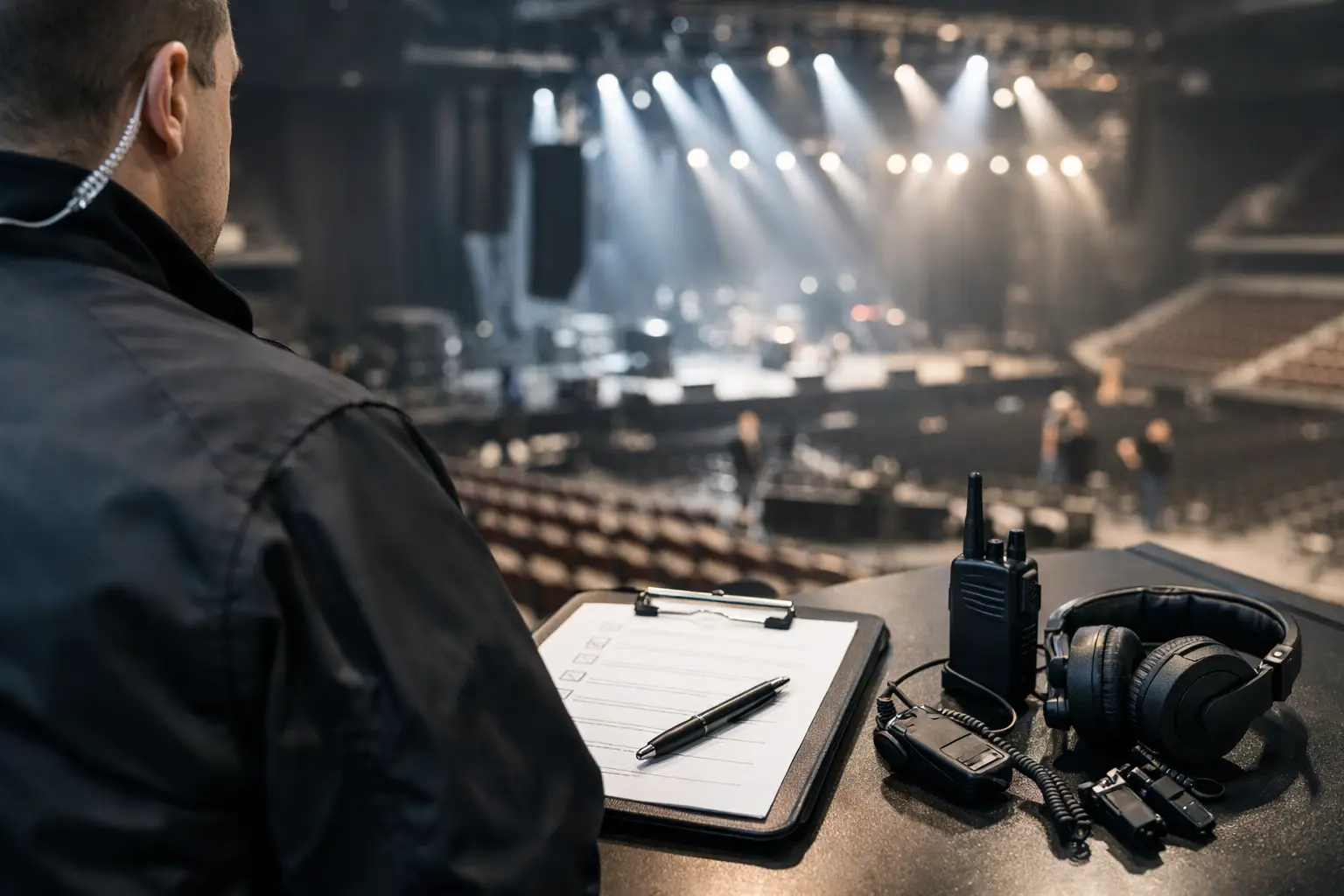
A full arena does not become difficult at the moment an incident occurs. It becomes difficult when unclear access arrangements, incomplete briefings and poorly defined responsibilities are allowed to carry through to doors open. This arena security planning checklist is built for venue operators, promoters and event teams that need disciplined control across a high-footfall live event.
The objective is not simply to place personnel at entrances. It is to create a deployment that protects people, supports lawful entry, maintains crowd flow and gives the event leadership team clear control when conditions change.
Start the arena security planning checklist with event risk
Every arena event has a different operating profile. A seated comedy performance, a sold-out concert, a boxing night and a sporting fixture can use the same building but demand very different security arrangements. Attendance figures matter, but they are only one part of the assessment.
Establish the event profile before confirming staff numbers. Consider the audience demographic, artist or team profile, alcohol provision, finish time, public transport arrangements, known protest risk, ticketing method and whether standing areas are in use. Promoters should also identify any VIP arrivals, media activity, guest lists or restricted back-of-house movements that could affect access control.
Review the venue layout in operational terms rather than relying on a floor plan alone. Walk the public approach routes, queueing areas, turnstiles, search points, concourses, toilets, bars, seating blocks, standing pens, production areas and emergency exits. Identify where people will naturally stop, merge or turn back. Those are the locations where a manageable crowd can quickly become compressed.
The risk assessment should produce practical decisions: where to deploy personnel, when to open each entry point, which areas require supervision, and who has authority to stop admissions or alter the ingress plan. If those decisions are left until the event is live, the response will be slower and less consistent.
Confirm command, communication and accountability
A capable arena deployment needs a clear chain of command. Event personnel should know who is leading the security operation, who manages each zone, who controls the control room or event communications channel, and who makes decisions about evacuation, delayed entry or venue lockdown.
This is particularly important where the venue, promoter, production team, catering operator and security provider all have staff on site. Shared responsibility can create gaps unless duties are agreed in advance. Set out who owns crowd management, ticket issue escalation, ejection decisions, lost children, medical coordination, emergency gate opening and liaison with emergency services.
Communications must be tested before the public arrives. Radios need assigned channels, call signs, charging arrangements and spare units. Staff should understand the language used for urgent support, medical assistance and escalating disorder. Avoid vague calls such as “trouble at the bar”. A useful message states the exact location, nature of the issue, number of people involved and whether immediate assistance is required.
A written incident log is equally valuable. It creates a reliable record of decisions, times, actions taken and people involved. That record can support post-event review, client reporting and any subsequent investigation.
Build staffing around pressure points, not headcount alone
A deployment cannot be measured solely by the number of licensed door supervisors or event stewards on the rota. The correct resource level depends on the building, event profile, crowd behaviour, entry method and the standard of control expected by the client.
Allocate experienced personnel to roles where judgement matters most. This usually includes entry supervision, search teams, pit or front-of-stage positions, response officers, back-of-house access and team leadership. Less complex positions can be supported by trained event stewards, provided that their duties, reporting route and escalation process are clear.
The staffing plan should account for more than the doors-open period. Ingress, the performance interval, egress and dispersal often produce different pressures. A team that is adequate for a controlled ticket scan may be insufficient for a fast egress into poor weather, disrupted transport or a busy city-centre environment.
Plan relief and welfare properly. Long shifts, high noise levels and sustained crowd contact affect attention and decision-making. Staggered breaks, food and water arrangements, welfare points and relief staff help maintain standards late into the event. A tired officer at a high-pressure position is not a minor administration issue. It is an operational risk.
Set entry, search and prohibited-item procedures
Entry arrangements must be consistent, visible and proportionate. Guests need to understand where to queue, which entrance applies to their ticket, what they may bring inside and what will happen if an item is refused. Clear pre-event messaging reduces confrontation at the perimeter, but it does not replace a properly managed entry operation.
Agree the search policy with the venue and event organiser before deployment. It should define the conditions of entry, the search method, handling of prohibited items, refusal procedures and escalation route where a person becomes uncooperative. Personnel must work within their training, licence conditions and legal powers at all times.
Separate ticket resolution from the main entry flow where possible. Guests with duplicate tickets, invalid passes, accessibility queries or incorrect gate details should not be left in the live queue. A designated resolution point protects the pace of admissions and prevents frustration from spreading through the line.
For larger events, review the following controls as part of the final readiness check:
- Queue barriers, signage and lighting are in place and do not obstruct emergency routes.
- Search lanes have suitable space, clear roles and a controlled route for refused entry.
- Accessible entry arrangements allow dignified assistance without bypassing security checks.
- Deliveries, contractors, performers and crew use separate access routes with appropriate credential checks.
- Bag storage, surrendered items and found property have defined recording and handover procedures.
Protect crowd flow inside the venue
The most significant crowd risks are often created after admission. Congested concourses, busy bar queues, bottlenecks at toilet areas and movement towards the stage can change rapidly, particularly during support-act changes, intervals or a headline artist’s arrival.
Zone supervisors should monitor crowd density, movement direction and early signs of distress. The operational question is not whether an area looks busy. It is whether people can still move safely, whether exit routes remain clear and whether staff can reach a person who needs help.
Standing areas require particular discipline. Define the capacity, barrier lines, entry and exit points, viewing arrangements and process for managing persons in distress. Front-of-stage teams need a shared approach with production and medical teams so that a welfare extraction can be identified, communicated and completed without creating further pressure in the crowd.
Alcohol management should be considered alongside crowd behaviour, not as a separate commercial matter. Security teams need clear reporting routes for suspected intoxication, aggressive conduct, vulnerable guests and repeated attempts to gain access to restricted areas. The response should be measured and professional, with decisions recorded where intervention, refusal or removal is required.
Prepare for incidents before they demand a response
A strong incident plan is specific enough to guide action but flexible enough to work in real conditions. Brief teams on credible scenarios: medical emergencies, missing persons, fire alarms, suspicious items, disorder, crowd surges, hostile behaviour, evacuation and communications failure.
For each scenario, establish the first action, who must be informed, the safe route for responders and the point at which senior event leadership takes control. Emergency procedures should be rehearsed where possible, especially when a venue layout, production build or event format has changed.
Do not treat the debrief as an afterthought. Once the site is clear, collect incident logs, radio observations and supervisor feedback while details are fresh. Review admissions times, queue performance, ejections, medical activity, crowd pinch points and staffing changes. This turns one event’s operational learning into a better plan for the next.
A reliable arena security plan gives organisers confidence that security is being delivered as a controlled operation, not improvised on the night. For structured event security planning and professional deployment across London, the Thames Valley and the South of England, contact Definitive Security Services at info@definitive-security.uk for a quote or planning discussion.
Leave a Reply