
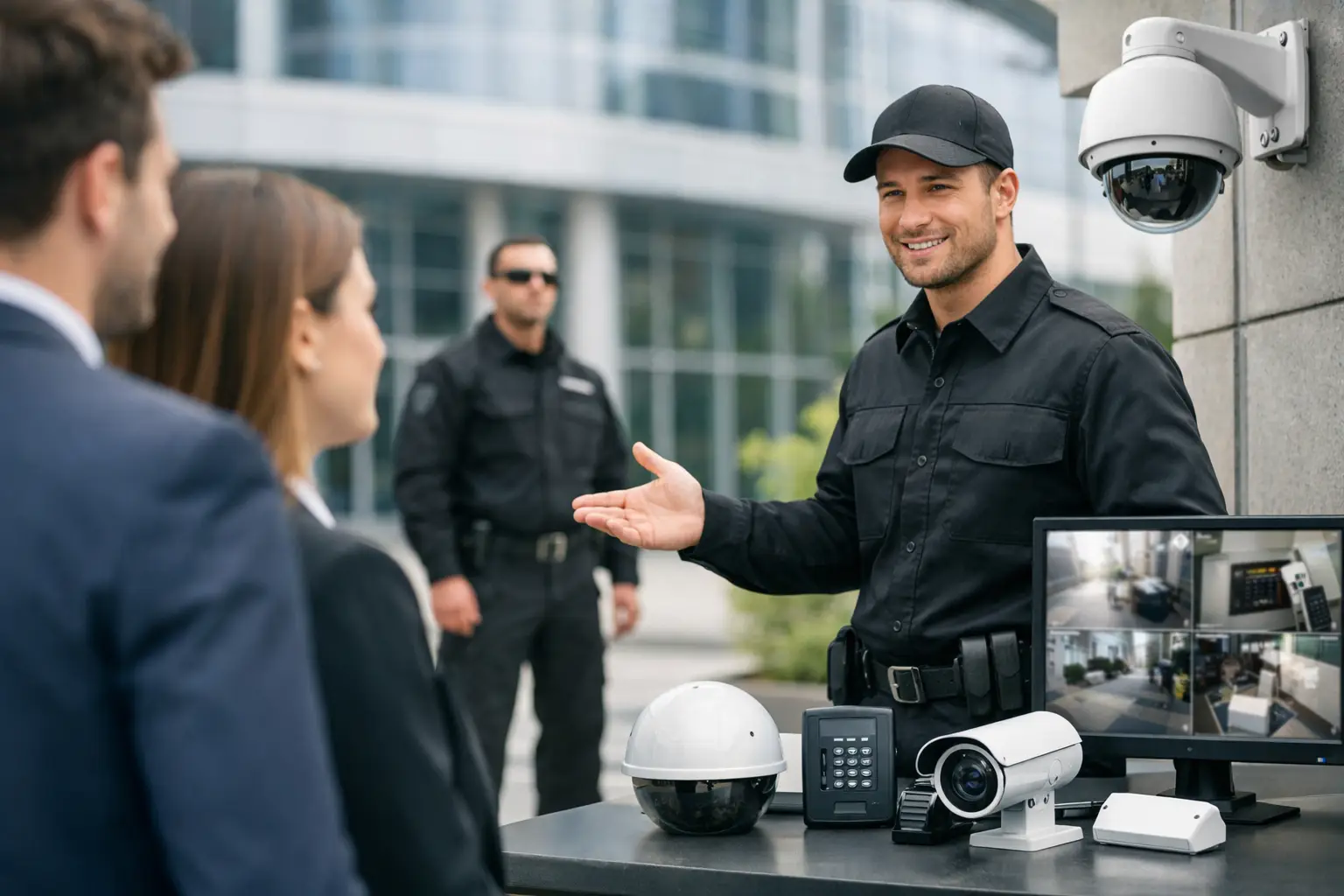
A search for the best commercial security companies should not end with a comparison of hourly rates. For a business, venue or event operator, the real question is whether a provider can maintain control when the operating environment changes: a restricted area is breached, a queue builds unexpectedly, a keyholder is unavailable, or an incident requires calm and accurate action.
Security personnel represent the front line of your operation. Their conduct affects staff confidence, visitor experience, asset protection and your organisation’s reputation. The right supplier provides capable people, but also the preparation, supervision and accountability that enable those people to perform effectively.
What separates the best commercial security companies
The strongest providers treat every deployment as an operation, not a shift to fill. They take time to understand the site, its risks, its people and its routines before assigning personnel. That standard matters whether you need a static officer for a corporate office, door supervisors for a licensed venue, event security for a concert hall, or a disciplined team for a construction project.
A credible security company should be clear about what it will deliver, who is responsible for delivery and how concerns will be escalated. Vague assurances about being “fully trained” are not enough. Decision-makers should expect evidence of appropriate licensing, site-specific preparation, clear command arrangements and meaningful reporting.
Price remains relevant, particularly where coverage is required across long opening hours or multiple locations. However, the lowest rate can become expensive if it produces inconsistent attendance, poorly briefed staff, weak incident records or repeated management intervention from your own team. Value comes from reliable deployment and reduced operational exposure.
Start with the risk, not the headcount
A common procurement mistake is to begin with a simple question: how many guards do we need? Headcount is only one part of the decision. First establish what the security function must achieve.
For a retail establishment, the priority may be deterring theft while maintaining a welcoming customer environment. For a construction site, it may be access control, protection of plant and materials, and accurate records of contractors entering the site. A nightclub or bar requires confident door supervision, customer management and a firm response to disorder. At a festival or sports venue, crowd movement, entry procedures, restricted areas and communication between teams can define the entire operation.
The provider should ask practical questions about access points, peak periods, vulnerable areas, public-facing expectations, lone-working risks, emergency procedures and who has authority to make decisions on site. If the conversation moves straight to a quote without examining these points, the proposed deployment may be based on assumptions rather than your actual risk profile.
Look for site-specific planning
Planning should result in a clear operational picture for the officers assigned. That includes post instructions, expected standards of conduct, reporting routes, escalation thresholds and relevant site information. A guard who understands the building layout but not the client’s opening protocol, visitor policy or incident process is not fully prepared.
For events, planning must go further. Arrival patterns, queue management, backstage access, evacuation routes, artist or VIP movements, alcohol-related risks and handover arrangements all require defined control measures. The best providers do not rely on generic event experience alone. They brief teams for the specific venue, audience and programme.
Check compliance and professional standards
Commercial buyers need confidence that security staff are lawfully and appropriately deployed. Ask the provider how it verifies licences, maintains staff records and ensures personnel are assigned to work they are qualified to undertake. Door supervision and security guarding roles carry different requirements, and a professional supplier will not blur those distinctions.
You should also examine insurance, right-to-work checks, vetting arrangements and the procedures used when a team member cannot attend. Absence can happen in any workforce. The important issue is whether the company has a controlled process for replacing staff without lowering the standard of the deployment.
Training should be relevant to the setting. A polished officer at a corporate reception may need strong customer-facing judgement and discretion. A construction deployment may demand heightened awareness of perimeter risks and contractor access. Event personnel need clarity, stamina and the ability to follow command instructions under pressure. Generic training certificates do not replace operational suitability.
Assess leadership, supervision and communication
Security provision can look satisfactory at the start of a contract and deteriorate when supervision is weak. This is why it is worth asking who oversees the deployment, how often performance is reviewed and what happens after an issue is raised.
A dependable provider has clear lines of responsibility. Site personnel know who to contact, the client knows who owns the response, and serious matters are elevated promptly. This avoids the familiar problem of an incident being passed between an officer, a scheduler and an account contact with no one taking control.
Communication should be proportionate and useful. Daily occurrence records may be necessary for some sites, while event clients may need pre-event briefings, live operational updates and post-event incident reporting. The format matters less than the quality: reports should be factual, timely and detailed enough to support follow-up action.
Ask to see the type of information you can expect after an incident. A report should establish what happened, when it happened, who was involved, what action was taken and whether any further control measure is required. Poorly written reports make it harder to manage complaints, investigate losses or demonstrate that reasonable action was taken.
Compare proposals on delivery, not promises
When reviewing quotes, make sure you are comparing like for like. One proposal may include structured site briefings, supervisory oversight and comprehensive reporting, while another may only cover the person standing at the post. The figures might appear comparable until an incident exposes the difference.
Use the following questions to test each proposal:
- Who will conduct the initial site assessment and brief the deployed team?
- What is the process for covering absence or responding to a last-minute change?
- How are incidents recorded, escalated and reviewed with the client?
- What experience does the provider have in your operating environment?
- Who is available to make decisions outside normal office hours?
- How will service performance be measured during the contract?
A good supplier will answer directly and explain any limitations. Be cautious of guarantees that sound absolute. Security is risk management, not a promise that no incident will ever occur. The better test is how well the provider prevents foreseeable issues, responds when conditions change and learns from what happens.
Consider the relationship after mobilisation
The first week of a contract is not the finish line. It is when practical issues become visible: a gate that needs a revised access procedure, a peak-time queue that needs a different layout, or a reporting process that does not give management the information it needs.
Choose a provider that expects to refine the operation with you. Regular review does not mean the original plan was inadequate. It shows that the provider is paying attention to real conditions and adjusting controls responsibly. This is especially valuable for venues with changing event schedules, businesses with seasonal trading patterns and sites undergoing phased construction.
For organisations operating across Reading, the Thames Valley, London and the South of England, local familiarity can also support reliable mobilisation. It should not replace proper planning, but it can make a material difference when staffing requirements change quickly or an event schedule moves at short notice.
Make security part of operational control
The right security company should feel like a disciplined extension of your management team. Officers must be visible when visibility deters risk, discreet when customer experience requires it, and decisive when an incident demands intervention. That balance comes from careful selection, sound briefings and accountable leadership.
Definitive Security Services provides manned guarding, door supervision, event security and event stewards for commercial clients, venues and event operators. For a quote or a practical consultation on your requirements, contact info@definitive-security.uk. Follow and like Definitive Security Services on Facebook for operational guidance and updates from The Security Briefing.
Leave a Reply