
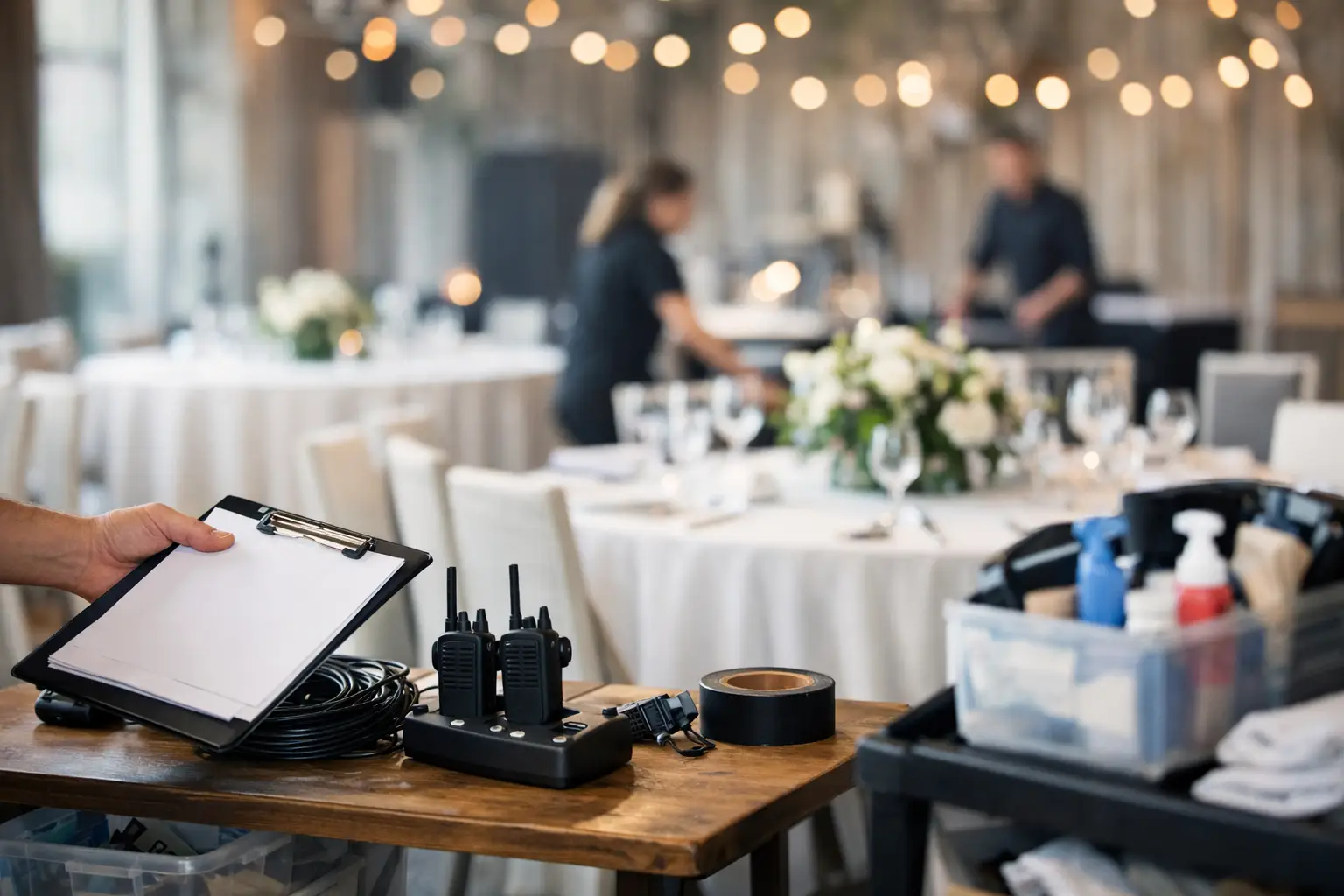
A venue rarely becomes disorderly without warning. In most cases, the signs appear earlier – queues that start to bunch, communication between teams that becomes patchy, frustrated guests who are left waiting, or a bar area that is already running hotter than the rest of the site. If you are asking how to reduce venue disorder, the real task is not simply reacting to incidents. It is building control before pressure points turn into confrontation.
For venue operators, event organisers and duty managers, disorder is not just a security issue. It affects licensing risk, staff welfare, customer experience, revenue, and your ability to keep the event or trading session running safely. The strongest approach is operational, not improvised. That means planning the environment, deploying the right people, and setting clear thresholds for intervention.
How to reduce venue disorder starts before doors open
Disorder is often treated as something that begins when customers arrive. In practice, it usually starts much earlier, during planning. A poor site layout, vague entry policy, weak briefing, or under-resourced front-of-house operation can create the conditions for arguments, non-compliance and flashpoints later in the day or night.
A proper pre-opening assessment should look at crowd profile, capacity, alcohol service, event timings, likely pinch points and historic incidents. A student night has a different risk pattern from a private function. A football ground has different triggers from a music venue. The same applies to community events and seasonal celebrations, where mixed audiences and open access points can create less predictable movement.
This is where many venues go wrong. They focus on headcount rather than control. Having more staff on paper does not help if they are in the wrong locations, unclear on escalation routes, or working without a shared operating picture.
Build order through layout, access and movement
Physical setup plays a central part in how to reduce venue disorder. People become frustrated when movement is unclear, waiting times are excessive, and basic information is not visible. Those conditions increase tension long before any formal intervention is needed.
Entry and exit points should be easy to understand and properly managed. If guests are being searched, checked or ticket-scanned, there needs to be enough space to prevent crowd compression. If smoking areas, toilets, bars and stairwells create crossing flows, you should expect congestion and friction, particularly during peak periods.
Good venues reduce conflict by removing avoidable pressure. That may mean repositioning barriers, redesigning queue lanes, changing the location of bag checks, or dedicating staff to wayfinding rather than placing everyone on enforcement tasks. In some environments, a visible stewarding presence is enough to maintain flow. In others, particularly alcohol-led settings, experienced door supervisors are needed to manage boundaries firmly and early.
The point is simple. Disorder often grows in the gaps between access control, customer service and security. If those functions are disconnected, the venue becomes harder to control.
Staff briefings are not a formality
A short, generic briefing before opening is rarely enough. Teams need a clear operational picture. They need to know what the event profile is, where likely risks sit, who is leading the shift, what the radio protocol is, and when verbal intervention becomes a removal, refusal or emergency response.
Strong briefings also align venue management and security leadership. That matters because mixed messages create hesitation. If one manager wants a soft approach while another expects immediate ejections, staff will second-guess decisions at the exact moment they need confidence and consistency.
A useful briefing covers more than roles. It sets standards for search policy, intoxication thresholds, conflict management, incident recording and police or ambulance escalation. It should also identify vulnerable person procedures, because disorder is not always about aggression. Sometimes the real risk sits with an intoxicated guest who is lost, isolated or medically unwell in an already pressured environment.
For larger venues or higher-risk events, leadership-level briefings are just as important as front-line instructions. Senior decision-makers need to understand the agreed operating posture so tactical decisions on the night support, rather than undermine, the control plan.
The right security presence changes behaviour
Security is not only there to respond once disorder starts. A competent, visible and well-positioned team changes behaviour before incidents develop. People are less likely to test boundaries when they can see clear supervision, active patrols and confident control at entrances, bars and circulation spaces.
That presence needs to match the environment. A nightclub may need experienced door supervisors who can assess intoxication, spot group dynamics and deal with refusals without escalating the atmosphere. A family event may need a more service-led stewarding model supported by supervisors who can step in where behaviour deteriorates. A stadium, arena or festival usually requires layered deployment, with entry control, roaming response, pit or front-of-stage coverage, and an incident command structure that can absorb pressure quickly.
There is a trade-off here. An overbearing presence can affect customer experience if the setting is low risk. An underpowered or poorly led team can leave staff exposed and create a perception that rules are optional. The answer is not one fixed model. It is matching deployment to audience, venue type and operating hours.
Alcohol management is usually part of the answer
If your venue serves alcohol, then any serious discussion about how to reduce venue disorder has to include bar operations and licensing controls. Security cannot compensate for poor alcohol management.
Problems often begin when service is inconsistent. One member of staff refuses an intoxicated customer, another serves them moments later, and security is then asked to deal with the fallout. That is not a security failure. It is a control failure across the venue.
Bar teams, floor staff and security should work to the same threshold for refusal and intervention. If a customer is becoming disruptive, there must be a clear route for support before matters become confrontational. This is where radio discipline matters. Calm, precise communication prevents delays and avoids multiple staff crowding into the same issue without coordination.
It also helps to pay attention to timing. Disorder tends to increase around specific moments – just after peak arrival, around last orders, at dispersal, and after a performance or match ends. These periods need stronger coverage and tighter supervision, not routine staffing patterns.
Early intervention is better than dramatic intervention
Once a situation becomes public and heated, your options narrow. Early intervention gives staff more room to de-escalate quietly, reposition individuals, or separate groups before others are drawn in.
That relies on staff who can recognise behavioural indicators rather than waiting for an outright breach. Raised voices, fixation on another guest, refusal to follow simple directions, repeated attempts to re-enter restricted areas, and signs of rising intoxication all matter. So does context. A minor disagreement in a quiet lounge is different from the same disagreement near a packed bar at closing time.
The best teams do not rush every incident, but they do not ignore warning signs either. They apply proportionate action early, maintain communication, and keep supervisors informed. That reduces the chance of incidents spreading across the venue.
Incident reporting improves future control
One of the most overlooked ways to reduce disorder is to learn properly from previous shifts and events. Many venues record incidents only for compliance purposes. The stronger approach is to use reporting to improve deployment, procedures and leadership decisions.
If three separate incidents took place near one staircase, that may point to a movement issue rather than random bad behaviour. If repeated refusals occurred at a secondary entrance, staff positioning or screening standards may need to change. If removals increased after a certain promotion or event type, the audience profile may need closer planning next time.
Post-event reviews should be factual and specific. What happened, where, when, who responded, how long it took, and what changed afterwards. Useful reviews do not look for blame first. They look for operational lessons. That is how venues move from reactive security to controlled delivery.
For operators managing multiple sites or large seasonal programmes, this discipline becomes even more valuable. Consistent reporting creates trend data, and trend data supports better staffing, better briefings and better purchasing decisions.
Leadership and clarity matter when pressure rises
Venues become vulnerable when authority is unclear. During busy periods, staff need to know who is making calls on admissions, refusals, ejections, emergency response and liaison with external services. If there is confusion at leadership level, the room will feel it quickly.
A controlled venue usually has visible supervisors, clear radio channels, defined escalation routes and an agreed chain of command between security and venue management. That structure helps everyone. It protects front-line staff from being left to make isolated decisions, and it gives senior teams a clearer view of developing risk.
This is one reason disciplined security providers add value beyond filling shifts. A planned deployment, structured briefing and clear reporting line give venues more control than a basic staffing model ever will.
Reducing disorder is rarely about one dramatic change. It is usually the result of many smaller controls working together – layout, staffing, briefing, communication, alcohol management and confident leadership. When those elements are aligned, the venue is easier to manage, incidents are easier to contain, and your team can focus on keeping people safe rather than constantly catching up. The best time to regain control of a venue is before you have lost it.
Leave a Reply