
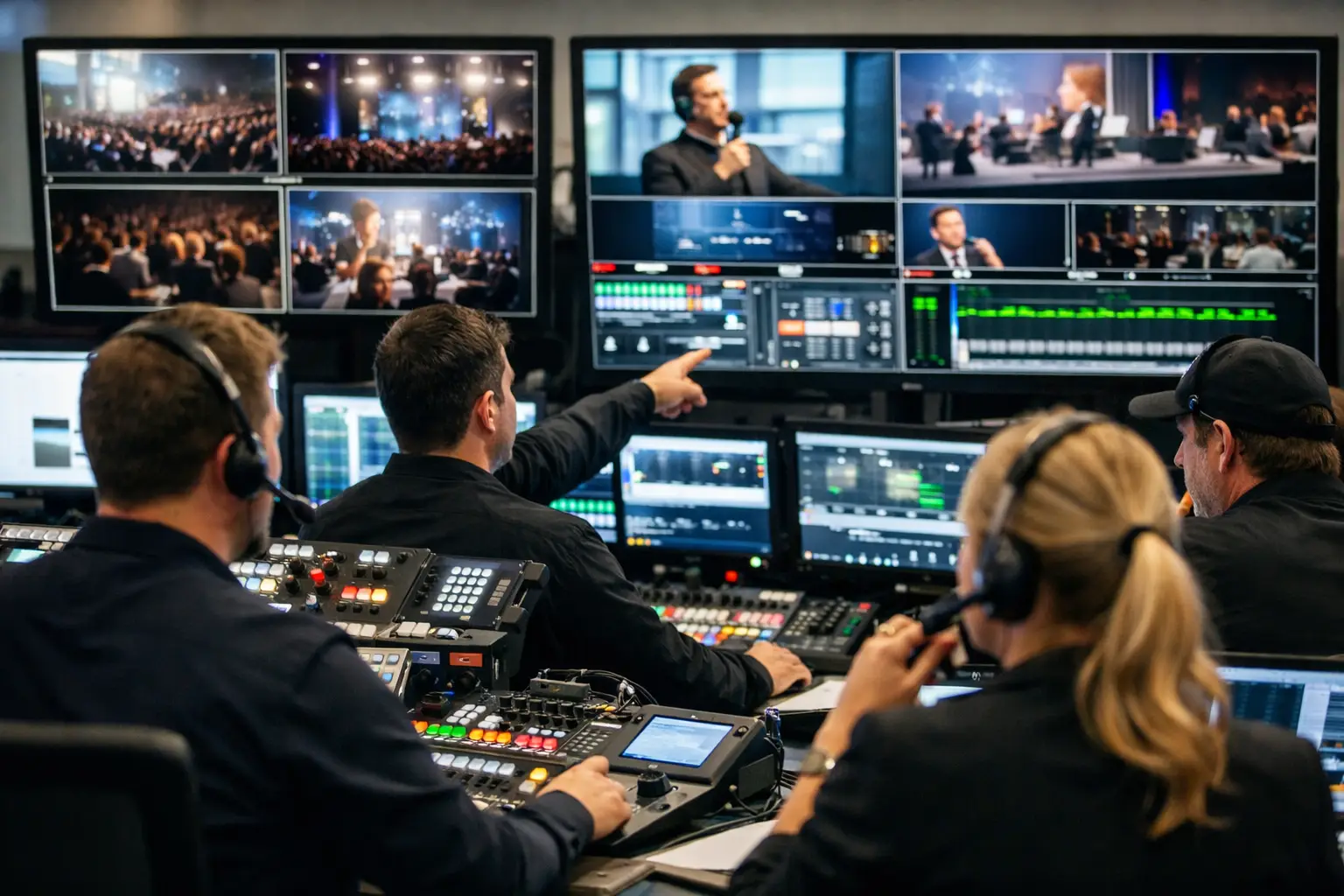
When an event starts to drift, the control room usually knows before the crowd does. A radio channel becomes congested, a gate team asks for support twice in five minutes, medical requests start clustering in one area, or a weather update changes movement plans. That is why top event control room practices matter – not as theory, but as the operating standard that keeps decisions clear, timely and accountable.
For event organisers, venue operators and security leads, the control room is the point where information becomes action. If it is poorly structured, even a well-staffed event can suffer from delays, crossed instructions and weak incident records. If it is run properly, it improves command discipline, strengthens safety decisions and gives senior stakeholders confidence that risks are being managed in real time.
What the control room is really there to do
At a basic level, the control room monitors communications, records incidents and directs resources. In practice, its role is wider. It provides a single operational picture, tests whether information is reliable, prioritises what needs attention first and makes sure instructions go out through the correct channels.
That distinction matters. A noisy room full of screens and radios can look active without being effective. The real test is whether the control room helps the event management team make better decisions under pressure. It should reduce confusion, not add to it.
For smaller events, this may be a compact command point with one event manager, a security supervisor and a loggist. For larger venues, festivals or televised events, it may involve security management, stewarding leads, medical representatives, traffic teams and venue operations. The principle stays the same – clear command, verified information and disciplined communication.
Top event control room practices start before event day
Most control room failures begin long before the first attendee arrives. They come from vague roles, unclear escalation thresholds and assumptions about who is responsible for what. A control room cannot improvise its structure once pressure builds.
Pre-event planning should define the command model in plain terms. Who has authority to make operational calls? Which incidents require escalation to the event manager, safety officer or client representative? Who is responsible for locking in decisions and recording the rationale? If those answers are not agreed in advance, valuable minutes are lost during live incidents.
Physical layout also deserves more attention than it often gets. The room should be organised around function, not status. People who need to communicate regularly should be placed so they can do so without creating noise or overlap. Screens should display useful operational feeds rather than every available source. If CCTV, radio traffic, incident logging and weather monitoring are all competing for attention with no hierarchy, important information will be missed.
Briefings are equally critical. Every control room operator should understand site layout, event timings, crowd profiles, emergency procedures, radio protocols and reporting lines. This is not just for senior staff. The person maintaining the incident log or fielding incoming calls needs enough context to recognise what is routine and what may indicate a developing issue.
Build a control room around roles, not personalities
One of the most reliable event control room practices is to assign clear roles and stick to them. Strong individuals are valuable, but events should not depend on one person carrying the room through force of personality.
In most settings, the core functions are command, communications, incident logging and coordination with key partners. Sometimes one person can cover more than one role, particularly at lower-risk events. At larger events, separating those functions is usually the better decision because it protects concentration and accountability.
The person leading the room should not be trying to capture every detail in the log. Equally, the person logging incidents should not be issuing tactical instructions unless that has been formally agreed. Blurred roles create gaps. They also make post-incident review much harder, because nobody can clearly explain who knew what and when.
This is where disciplined providers stand apart from basic staffing models. Effective event security is not just about putting licensed personnel on the ground. It depends on command structure, briefed supervisors and a control room that supports the wider plan.
Communication must be structured, not constant
A common mistake is to treat a busy radio network as proof of effective control. It often means the opposite. Constant traffic clogs channels, distracts supervisors and makes it harder to identify priority calls.
Good communication starts with basic radio discipline. Messages should be brief, specific and directed to the correct role. Staff should know when to report for awareness, when to request action and when to use emergency procedures. Control room operators should challenge vague updates. “There’s an issue near the bar” is not enough. Location, nature of incident, current risk and support required should be confirmed quickly.
Closed-loop communication is one of the top event control room practices because it prevents assumptions. An instruction should be acknowledged, repeated where necessary and confirmed once completed. Without that loop, the control room may believe an action has been taken when it has only been heard.
There is a balance to strike. Overly rigid language can slow communication if teams are not trained in it. But a lack of structure creates avoidable errors. The right approach depends on the event profile, the experience of the teams involved and the speed at which incidents are likely to develop.
Incident logging is an operational tool, not an admin task
Poor logs are one of the clearest signs of a weak control room. During an event, that causes immediate problems. After an event, it creates legal, contractual and reputational exposure.
An effective incident log should record times, locations, reporting sources, actions taken, escalation points and outcomes. It should also distinguish between confirmed information and unverified reports. That sounds simple, but under pressure it often slips. Operators may summarise too broadly, omit timings or fail to record why a decision was made.
The log is not just for later review. It helps the control room identify patterns while the event is live. Three minor reports from the same zone over twenty minutes may show a developing crowd management problem. A series of welfare issues at one entry point may point to queuing, weather exposure or poor steward positioning. Without accurate logging, those patterns stay invisible for too long.
For organisers and venue operators, this matters beyond the event itself. If there is a complaint, enforcement query or insurance issue, your records need to show a clear operational picture. A disciplined log supports that.
Prioritisation is what keeps the room effective
Not every incident deserves the same level of attention. The control room must separate noise from risk without dismissing useful information. That requires judgement, but it also requires agreed thresholds.
A sensible control room triages issues by impact, urgency and potential to escalate. A lost property report should not consume the same attention as a developing ingress pinch point. A minor ejection can usually stay with door supervision unless aggravating factors appear. A vulnerable person report, by contrast, may need immediate coordination across security, stewarding and welfare teams.
This is where experienced leadership makes a significant difference. Teams need to know which issues can be managed locally and which must come back into the command structure. Too much escalation overwhelms the room. Too little creates blind spots.
Multi-agency coordination needs discipline
At larger events, the control room often includes or liaises with medical providers, traffic management, venue operations, production teams and sometimes emergency services. That can improve decision-making, but only if information flow is controlled.
Each party has its own priorities and terminology. Security may be focused on crowd movement, while production is concerned with programme timings and medical teams are tracking patient care. The control room has to translate those inputs into one operational picture.
That means avoiding side conversations that bypass the room, confirming major decisions aloud and making sure everyone understands the current operating posture. If weather plans change, for example, that message must be consistent across all leads. Partial updates create risk very quickly.
Review while the event is live, not just after it
One of the most overlooked practices is the live operational review. If an event runs for several hours, conditions will change. Entry pressure eases, alcohol-related issues may increase, crowd density shifts and staff fatigue becomes a factor. A control room should not simply react to calls as they arrive.
Scheduled check-ins help reset the picture. That may mean reviewing key zones every thirty minutes, confirming staffing resilience before headline acts or reassessing egress plans when transport updates change. These moments create space for proactive decisions.
They also help challenge assumptions. A plan that looked right at 11 am may not be right at 7 pm. Strong control rooms are willing to adapt while keeping command lines intact.
For buyers of event security services, this is often the difference between labour and leadership. A provider that understands event command will brief properly, feed reliable information into the control room and support decision-making instead of waiting to be told what is obvious.
The control room does not need to be complicated to be effective. It needs the right people, a clear structure, disciplined communications and accurate records. Get those right, and the room becomes what it should be – a calm point of control when the rest of the event is moving fast.
Leave a Reply